







Passive vs. active earth monitoring
Earth Monitoring: Passive or Active?
For years now, simple passive earthing has been used throughout industry as a low-cost safety measure and protection against fires and explosions caused by static electricity, but is it as safe as you think?

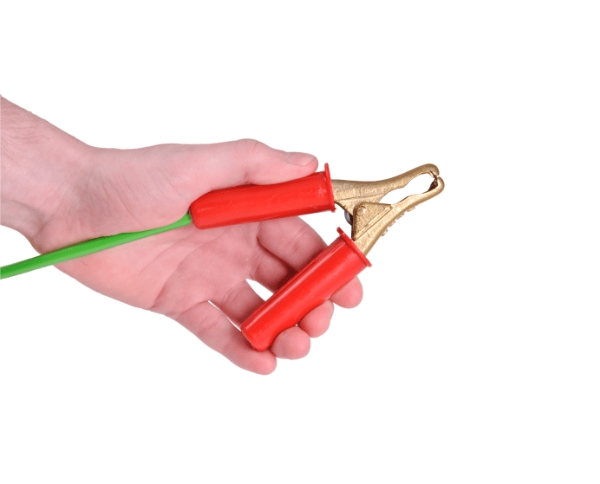
Passive earthing clamps
Passive earthing clamps and cables are only suitable if the metallic object to be earthed has a bright, clean surface. This allows even a poorly designed passive earthing clamp to make a low-resistance connection to the metal object.
However, not every industrial environment can use a bright, clean metal surface, as mild steel usually needs painting to prevent rust and corrosion. This is clearly a physical barrier between the metal surface and the passive earthing clamp.
Paint is the number one enemy of successful and reliable passive earthing. The other main enemy is the product itself, causing a barrier between the metal and the clamp with passive earthing; even bright, clean stainless steel can be affected by product coatings.
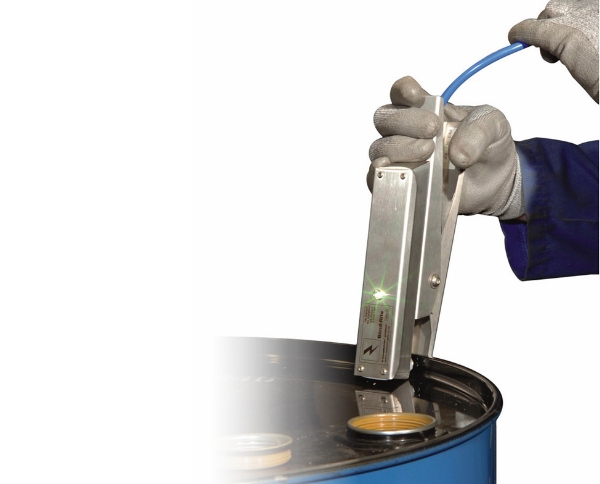
Active earthing clamps
So, what is the alternative to passive earthing clamps and cables? Well, it is active earthing clamps and cables. When you use passive earthing clamps, how do you know that you have made a good low-resistance connection to the metal object and the local site earth point? You do not, you just cross your fingers!
Active earthing clamps contain intrinsically safe circuits that measure the resistance between the clamp’s teeth and the local site earth point to be 10 ohms or less. This metal-to-metal 10 ohms or less resistance level is enshrined in International Standards (IEC TS 60079-32-1), Guidance (NFPA 77), and Recommended Practices (API RP 2003).
This 10 ohms or less connection with an active earthing clamp is confirmed to the user by a high-intensity flashing green LED. So, the use of active earthing clamps and cables takes the guesswork out of safety, allowing you to uncross your fingers and, most importantly, be safe.
What are the differences between passive and active earthing clamps and cables?
Passive monitoring clamp and cables
- A metallic earthing clamp designed to provide a resistance of 10 ohms or less.
- If there is a ‘break’ in the connection or the resistance to earth rises above 10 ohms, there is no way of knowing during the operation.
- Unable to confirm a good earth connection before the process begins.
Active monitoring clamp and cables
- Provides a resistance of 10 ohms or less as indicated via a high intensity flashing green LED within the system enclosure or on the Bond-Rite® CLAMP.
- The green 'GO' indication aids the SOP, e.g., do not proceed until the LED has gone green.
- Operators and plant personnel are accountable and secure about their working environment. Provides confidence that the process is reliably earthed before the operation commences.
- Performance is continuously monitored throughout the duration of the operation.